

Flying with a blocked ear can make an otherwise enjoyable journey uncomfortable. Changes in cabin pressure during take-off and landing may cause earache, fullness, popping or muffled hearing, particularly if ear wax is already narrowing the ear canal. Ear wax does not usually make flying unsafe, but it can make it harder to equalise pressure and may hide another ear problem. If you are travelling soon and think you have impacted wax, arranging an assessment before your flight can help you travel with greater confidence. Why ear wax can feel worse when flying Ear wax is a normal substance that protects and cleans the ear canal. Most of the time it moves out of the ear naturally. However, it can build up and become impacted, causing a blocked sensation, reduced hearing, itching, tinnitus or discomfort. During ascent and descent, the air pressure around you changes. The middle ear normally balances this pressure through the Eustachian tube, which connects the middle ear to the back of the nose and throat. If you have a cold, allergies or congestion, this process may be more difficult. A wax blockage in the outer ear canal does not itself stop the middle ear equalising, but the combination of blockage and pressure changes can make symptoms more noticeable. It is also possible to mistake another condition for ear wax. Ear infection, inflammation, fluid behind the eardrum or sudden hearing loss can all cause blocked hearing or discomfort. This is why an examination is important rather than assuming that wax is the only cause. When to seek ear wax removal before a flight Consider booking an assessment if you have symptoms such as: A blocked ear or muffled hearing that has developed gradually A feeling of fullness, pressure or discomfort in the ear Itching or mild tinnitus associated with a suspected wax build-up Previous problems with impacted wax, particularly if you use hearing aids or in-ear devices Difficulty hearing conversations, announcements or safety instructions It is sensible to arrange the appointment as early as possible before travelling. This allows time for the ear to be examined and, if necessary, for suitable softening treatment or a follow-up appointment. Last-minute removal may be possible in some cases, but there may not be enough time if the wax is very hard, tightly impacted or if an underlying problem is found. You should not delay seeking advice simply because your flight is approaching. A pharmacist or other qualified clinician can advise whether ear wax removal is appropriate and whether you should contact your GP or another healthcare professional instead. Symptoms that need medical advice rather than routine removal Arrange prompt medical advice if you have significant ear pain, discharge or bleeding from the ear, fever, marked dizziness, or swelling around the ear. You should also seek urgent medical assessment for sudden hearing loss, especially if it occurs in one ear or develops over a short period. Sudden hearing loss should not be assumed to be caused by wax. Tell the clinician if you have had an ear operation, a perforated eardrum, grommets, recurrent ear infections or significant dizziness. These details can affect whether wax removal is suitable and which method should be used. If you are unsure whether your symptoms are caused by wax, an examination is particularly important. What to expect at an ear wax removal appointment At Barnes Pharmacy, the appointment begins with questions about your symptoms, medical history and any previous ear problems. The ear canal and eardrum will be checked, where possible, using an otoscope. This helps establish whether wax is present and whether removal appears safe and appropriate. The removal method depends on the condition of the wax and your individual circumstances. A suitable service may involve microsuction or another clinically appropriate technique. Microsuction uses gentle suction under direct vision to remove wax from the ear canal. The clinician will explain the process before starting and should stop if you experience significant pain or discomfort. You may hear a loud or unusual sound during microsuction, and the ear can feel sensitive or slightly different immediately afterwards. Many people notice improved hearing once the blockage has been removed, although this is not guaranteed if another condition is contributing to the symptoms. If the wax cannot be removed safely in one appointment, you may be advised to use suitable softening drops and return for review, or to seek further medical care. Preparing for your appointment and journey Follow the service’s instructions about softening drops. Do not use drops if you have been told you have a perforated eardrum or if you have had ear surgery, unless a healthcare professional has advised that they are suitable. If you are uncertain, ask before using them. Avoid putting cotton buds, hairpins or other objects into the ear. These can push wax deeper, irritate the canal or injure the eardrum. Ear candles are not recommended because they can cause burns and do not provide a safe way to remove impacted wax. Once wax has been removed, ask whether there are any specific recommendations about flying. There is no universal waiting period after routine ear wax removal, but your advice may depend on what was found, how the ear feels and whether there are signs of infection or irritation. If your flight is imminent, mention this when booking so the clinician can take your travel plans into account. On the journey, swallowing, yawning or gently moving the jaw may help the ears adjust during ascent and descent. If you have a cold or nasal congestion, ask a pharmacist for advice about suitable treatment, particularly if you have other medical conditions or take regular medicines. Do not forcefully blow against a blocked nose, as this can worsen discomfort. Book before you travel Ear wax removal can help if impacted wax is contributing to blocked hearing or discomfort, but an assessment is the safest way to confirm the cause. For advice and an appointment in Welwyn, book our ear wax removal service before your

Which Travel Vaccinations Do You Need for a Winter Sun Holiday?
A winter sun break can feel like the perfect escape from cold, dark days. Whether you are heading to the Canary Islands, the Caribbean, South-East Asia, Africa or the Indian Ocean, it is important to check your travel health requirements before you go. The vaccinations you need depend on your destination, the areas you will visit, the activities you have planned and your own medical history. There is no single “winter sun” vaccination package that suits every traveller. A short stay in a well-developed resort may involve different considerations from a multi-country trip, a cruise with several shore excursions or a visit to friends and relatives. A consultation at Barnes Pharmacy’s Travel Clinic can help you make an informed plan for your journey. Start with your destination and itinerary Travel vaccination advice is based on the specific countries and regions you will visit, rather than simply whether a destination is hot. Tell the clinician about every stop on your itinerary, including airport transfers, excursions and overnight stays outside the main resort. Useful details include: your travel dates and length of stay; the countries, cities, islands and rural areas you plan to visit; whether you will be staying in hotels, hostels, private accommodation or camping; planned activities, such as trekking, cycling, animal encounters or visiting remote communities; whether you are travelling for work, volunteering or healthcare-related reasons; and any previous vaccinations, medical conditions, allergies or regular medicines. Some destinations have different health recommendations between urban and rural areas. Advice can also change, so it is best to arrange a professional travel health assessment rather than relying on an old vaccination record or advice intended for another traveller. Check your routine UK vaccinations first Before considering travel-specific vaccines, make sure your routine vaccinations are up to date. These may include protection against diseases such as tetanus, diphtheria, polio, measles, mumps and rubella. Some infections that are uncommon in the UK can still occur elsewhere, and travel can increase your exposure to people from many different countries. Measles is particularly relevant when travelling internationally. If you are unsure whether you have received two doses of the measles, mumps and rubella vaccine, mention this at your appointment. Your clinician can review your history and explain whether further vaccination should be considered. It is helpful to bring any available vaccination records. If you cannot find them, do not assume you are protected or that you must automatically repeat every vaccine. The clinician will consider your circumstances and advise you appropriately. Vaccinations commonly considered for winter sun holidays Hepatitis A Hepatitis A is a viral infection that can affect the liver and is usually spread through contaminated food or water. Vaccination is commonly considered for travellers to many parts of the world, including some popular long-haul winter sun destinations. Care with food and drink remains important even if you are vaccinated, but vaccination can provide valuable protection. Typhoid Typhoid vaccination may be recommended for some travellers, particularly those visiting areas where sanitation may be limited or where they will be eating and drinking outside established tourist facilities. It is not a substitute for careful food and water hygiene, and protection is not complete, so practical precautions still matter. Hepatitis B Hepatitis B is spread through infected blood and body fluids. It may be considered for longer trips, frequent travel, work involving healthcare, medical treatment abroad, close contact with local residents or activities where there could be a risk of injury or exposure. Your clinician will assess the likelihood of exposure rather than recommending it solely because a destination is warm. Rabies Rabies vaccination may be relevant if you are travelling to a country where rabies occurs and could come into contact with dogs, cats, bats or other mammals. It can be especially worth discussing if you will be spending time in rural areas, travelling with children, cycling or hiking, working with animals or staying away from medical facilities. Even after pre-travel rabies vaccination, any bite, scratch or exposure to an animal that could carry rabies requires urgent medical advice. Avoid handling animals while abroad and seek help promptly after any possible exposure. Yellow fever Yellow fever vaccination is only recommended for certain countries and areas, but some countries require proof of vaccination if you are arriving from, or transiting through, a country where yellow fever is present. The rules can depend on the length of a transit and your route, so provide the complete itinerary when you book. Where vaccination is required, an International Certificate of Vaccination or Prophylaxis may be needed. Do not leave this until the day before departure: a valid certificate may not take effect immediately, and a clinician must decide whether the vaccine is suitable for you. Other destination-specific vaccines Depending on your route, vaccinations for diseases such as Japanese encephalitis, meningococcal disease or polio may need to be discussed. These are not automatically required for every winter sun holiday. The recommendation can depend on local transmission, season, duration, accommodation and activities. Vaccines are only part of travel health Some important travel health risks are not prevented by routine travel vaccinations. For example, malaria can affect certain tropical and subtropical destinations, including parts of Africa, Asia, Central and South America and the Caribbean. There is no generally used travel vaccine that replaces malaria prevention for travellers. You may need bite avoidance measures and, for some destinations, antimalarial tablets. Use insect repellent, wear clothing that covers the skin where practical and sleep under a suitable mosquito net or in accommodation with effective screening or air conditioning when advised. Ask about malaria before you travel, even if you are staying in a resort, as risk can vary considerably within a country. Food and water precautions are also important. Choose food that is thoroughly cooked and served hot, be cautious with raw foods and unpasteurised products, and drink water from a safe, sealed source where local advice recommends it. Take care in the sun, remain hydrated and consider what medicines and first-aid supplies you

How to Order Repeat Prescriptions in Time for Weekends, Holidays and Medication Gaps
Long weekends, Christmas closures and summer holidays can make routine medicines harder to arrange, especially if you leave your repeat prescription until the last few doses. A little forward planning can help you avoid a medication gap and give your GP practice and pharmacy enough time to process your request safely. Start before your medicine is running low As a general guide, request your repeat prescription at least five working days before you need your next supply. This allows time for your GP practice to review and authorise the request, for the prescription to reach the pharmacy, and for the medicine to be prepared. Some medicines may take longer to obtain, so ordering earlier is sensible when your prescription falls around a bank holiday or busy seasonal period. Check how many tablets, capsules or doses you have left and look at the dates of upcoming weekends and public holidays. If your usual ordering day falls on a Friday, or your pharmacy is closed on a bank holiday, you may need to submit your request earlier than usual. Remember that working days do not normally include Saturdays, Sundays or bank holidays. It is usually best not to wait until you have only one or two doses remaining. Ordering early gives time to resolve problems such as an expired prescription request, a change to your medication, an item being unavailable or a query from your GP practice. Know who to contact for your repeat prescription Repeat prescriptions are normally requested from your GP practice, rather than directly from the pharmacy. You may be able to order through your GP practice, the NHS App, another approved online service or a repeat-request slip, depending on the arrangements at your surgery. Once your GP has authorised the prescription, it can usually be sent electronically to your nominated pharmacy through the Electronic Prescription Service. Barnes Pharmacy can help with the pharmacy side of the process and advise you about collection arrangements, but the GP practice remains responsible for approving the prescription. If you are unsure whether a request has been received or approved, contact your GP practice. If you are unsure whether the pharmacy has received the prescription or whether your medicines are ready, contact Barnes Pharmacy. Checking early is particularly important before a bank holiday, when GP practices and pharmacies may have different opening hours. Plan around bank holidays and seasonal closures Bank holidays can affect every stage of the process. Your GP practice may have reduced opening hours, prescription requests may not be reviewed on non-working days and wholesalers or delivery services may operate on a different schedule. Pharmacies may also have altered opening times. Before Easter, Christmas, New Year or a long weekend, check: When your GP practice will be open to accept and authorise requests. When Barnes Pharmacy will be open for prescription collection and advice. How much medicine you will have available throughout the holiday period. Whether any of your medicines may need to be ordered in advance. What to do if you need urgent help while your usual services are closed. Do not assume that a prescription requested on the last working day before a holiday will be ready immediately. A pharmacy may need to order an item, contact the prescriber or check a clinical detail before dispensing it. Arrange medicines before travelling If you are going away, check your supplies well before your departure date. You may need enough medicine for the whole trip, plus a little extra in case of travel delays or unexpected changes. Do not alter your dose or stop treatment to make your supply last longer. Keep medicines in their original labelled packaging where possible, and carry them in your hand luggage if you are flying. You may need additional documents for some medicines, particularly controlled drugs. Rules can vary depending on the medicine and the country you are visiting, so ask your GP practice, pharmacist or the relevant embassy well in advance. It is also worth checking whether your destination has different requirements for prescriptions or medicines. A prescription issued in the UK may not be dispensed in the same way overseas. If you are travelling during a busy holiday season, early advice gives you more time to address any concerns. What to do if you are facing a medication gap If you have run out, or are about to run out, contact your GP practice and pharmacy as soon as possible. Explain which medicine you need, the strength, how often you take it and when you last took a dose. Have your NHS number or other relevant details available if requested. For urgent needs when your GP practice is closed, NHS 111 may be able to advise you about the most appropriate next step. In some circumstances, a pharmacist may be able to offer an emergency supply following an assessment, but this is not guaranteed and depends on the medicine, your circumstances and the legal requirements. A pharmacist cannot simply issue every medicine without a valid prescription or appropriate legal authority. Do not borrow medicine from another person, use an old prescription as a substitute or double your next dose unless a healthcare professional tells you to. If you have missed doses and are worried about the possible effects, seek advice promptly. Medicines that may need extra planning Some medicines need particular care when ordering. Controlled drugs have additional legal requirements, and prescriptions may have validity and collection restrictions. Your pharmacist can explain what is needed and whether your timing is suitable. Medicines that require refrigeration, specialist ordering or regular monitoring may also take longer to arrange. If your treatment has recently changed, your repeat prescription may need a review before it can be issued. This is another reason to check your supply early rather than waiting for the final dose. Tell your GP practice and pharmacist if you have changed address, are temporarily staying elsewhere or want to change your nominated pharmacy. Keeping your details up to date helps reduce avoidable

When Should You Book Professional Ear Wax Removal? Symptoms, Risks and What to Expect
Ear wax is a normal substance that protects the skin inside the ear, traps dust and helps prevent infection. Usually, it works its way out of the ear naturally and does not need to be removed. However, wax can sometimes build up, become hard or block the ear canal. When this happens, professional ear wax removal may improve symptoms safely and help identify whether another condition is causing the problem. What symptoms can blocked ear wax cause? A build-up of ear wax may affect one or both ears. Common symptoms include: Muffled or reduced hearing A feeling of fullness, pressure or blockage in the ear Ringing or other noises in the ear, known as tinnitus Itching or irritation around the ear canal Mild earache or discomfort Changes in hearing that are more noticeable after bathing or swimming Some people only realise they have a blockage when they use headphones, speak on the telephone or notice that the television needs to be louder. Wax can also interfere with the use of hearing aids or make it difficult for a healthcare professional to examine the ear properly. These symptoms are not always caused by ear wax. Ear infections, problems with the eardrum, fluid behind the eardrum and sudden hearing loss can cause similar changes. Professional assessment is therefore important, particularly if symptoms are new, severe or persistent. When should you book professional ear wax removal? You may wish to book an assessment if your symptoms suggest that wax is blocking the ear and have not settled with appropriate self-care. Professional removal is also worth considering if you have tried recommended ear drops but your hearing remains affected, or if wax is preventing an examination of the ear or the fitting of a hearing device. People who regularly experience troublesome build-up may benefit from discussing a suitable approach with a pharmacist or other trained healthcare professional. Ear wax can be more likely to accumulate if you use hearing aids or earplugs, have narrow or hairy ear canals, or frequently put objects into your ears. This does not mean that regular removal is needed automatically; the ears should be assessed and removal should only be carried out when appropriate. It is sensible to arrange removal before an important hearing assessment, hearing-aid appointment or other examination if you know that wax commonly affects you. Allow enough time for an assessment and, if necessary, treatment rather than attempting to clear the ears at the last minute. When should you seek medical advice first? Ear wax removal is not suitable for everyone without further assessment. Contact a GP, NHS 111 or another appropriate healthcare service before booking, or tell the pharmacy about your medical history, if you have: Severe or increasing ear pain Fluid, pus or blood coming from the ear A fever or symptoms of an ear infection Sudden hearing loss or hearing that is rapidly getting worse Significant dizziness, loss of balance or vomiting A known or suspected perforated eardrum Recent ear surgery, grommets or other ear procedures An object stuck in the ear Sudden hearing loss should not be assumed to be ear wax and needs prompt medical assessment. Similarly, pain, discharge or marked dizziness may indicate a condition that requires treatment rather than wax removal. A professional may decide that removal should be postponed or that you need referral to another service. Why should you avoid cotton buds and home remedies? Cotton buds, hairpins and other objects can push wax deeper into the ear canal. They may scratch the delicate skin, cause bleeding or damage the eardrum. Ear candles and vacuum devices sold for home use are not recommended methods for clearing ear wax and may cause burns, blockage or injury. Some people can soften ear wax with suitable drops, such as products recommended by a pharmacist. However, drops should not be used if you may have a perforated eardrum unless a healthcare professional has advised you to do so. Almond oil should be avoided by anyone with an almond allergy. Follow the product instructions and ask for advice if you are unsure whether drops are suitable. What happens during professional ear wax removal? Your appointment will normally begin with questions about your symptoms, medical history, previous ear problems and any treatment you have tried. The practitioner will examine the ear to check whether wax is present and whether removal appears appropriate. They may also discuss your hearing and any symptoms that could suggest another cause. If removal is suitable, the practitioner will explain the procedure and answer your questions. Depending on the findings, training available and your individual circumstances, wax may be removed using an appropriate professional technique, such as microsuction or manual removal. In some settings, irrigation may be considered, but it is not suitable for everyone. The safest method depends on the condition of the ear canal and eardrum, the consistency of the wax and your medical history. You may hear a working noise or feel mild pressure during the procedure. Removal should not be painful, although a sensitive or irritated ear may feel uncomfortable. Tell the practitioner immediately if you experience pain, dizziness or distress. The ear may be checked again afterwards, and you may be given advice about keeping the ear healthy and preventing further build-up. Are there risks? Professional ear wax removal is generally well tolerated when carried out after suitable assessment, but no procedure is completely risk-free. Possible effects include temporary discomfort, irritation of the ear canal, a short-lived change in hearing, mild dizziness or temporary worsening of tinnitus. Removal may occasionally be incomplete, particularly when wax is very hard or tightly lodged. Less common complications can include infection, bleeding or injury to the ear canal or eardrum. This is why it is important to provide accurate information about previous ear surgery, perforations, infections and any symptoms such as discharge. Do not continue trying to remove wax at home if the ear becomes painful or symptoms worsen. How can you look after your ears afterwards?

How to Arrange Repeat NHS Prescriptions Before Travelling or Moving Away
Regular medicines are easy to take for granted until you are preparing for a holiday, working away from home or moving to a new area. A little planning can help you avoid running out, missing doses or having to arrange urgent medical care while you are away. If you receive repeat NHS prescriptions, start the process early. Your GP surgery, nominated pharmacy and the NHS prescription service each have different responsibilities, and some medicines have additional rules when you are travelling abroad. Barnes Pharmacy on Welwyn High Street can help with practical prescription queries and the collection or dispensing of valid NHS prescriptions. Check how much medicine you have Begin by checking your current supply and working out when you will need your next prescription. Allow time for your GP surgery to authorise the request, the prescription to reach the pharmacy and the pharmacy to prepare the medicines. Do not wait until the last few tablets. Pharmacies may need to order stock, particularly if your medicine is less commonly used. Bank holidays, weekends and surgery opening times can also affect the timetable. Check the quantities and directions on each medicine. Make a note of the date when your current supply is likely to run out. Check whether every medicine is included on your repeat list. Ask your pharmacy whether any item needs to be ordered in advance. Keep medicines in their original labelled packaging whenever possible. Requesting a repeat NHS prescription Most repeat prescriptions are requested through your GP surgery, the NHS App or another service approved by your surgery. A pharmacy may be able to help with the collection or dispensing process, but it cannot normally authorise a repeat item or make changes to your prescription. When ordering, request only the medicines you need and allow the usual processing time. If you are requesting supplies earlier than normal because you will be away, explain this clearly to your GP surgery. The surgery will decide whether an early or additional supply is clinically appropriate and can be issued under NHS rules. It is useful to provide your travel or moving dates, destination and the amount of medicine you already have. Your GP may need to review the request, especially if you are asking for a larger quantity or if your medicine has special storage or safety requirements. Ask about electronic repeat dispensing If you take the same medicines regularly, you may be suitable for electronic repeat dispensing, often called eRD. This allows a GP or other authorised prescriber to issue a series of repeat prescriptions electronically, which your nominated pharmacy can dispense at agreed intervals. eRD can be convenient when you are moving temporarily or will be away for several months, but it does not automatically provide an extra supply for travel. The intervals and quantities still need to be suitable, and some medicines may not be appropriate for this arrangement. Speak to your GP surgery or pharmacist to find out whether eRD is suitable for you. If you are travelling within the UK Moving or staying elsewhere in England does not necessarily mean you need to change your regular pharmacy immediately. With your agreement, an NHS prescription can usually be sent electronically to your nominated pharmacy. You may be able to use a different pharmacy for a particular prescription by changing your nomination or asking your GP surgery about the available options. If you are moving permanently, contact your new GP surgery as soon as possible. Registering with a new practice helps ensure that your medical records, repeat medicines and future reviews are managed locally. Take a list of your medicines, including strengths and directions, to any appointment. Do not assume that a pharmacy in another part of the UK will be able to access or dispense a prescription without the correct electronic or paper arrangements. Contact the pharmacy before travelling if you need to collect medicine away from home. If you are travelling abroad Arranging medicines for an overseas trip can be more complicated. An NHS prescription issued in the UK is not generally a way to obtain free medicine in another country, and medicines that are available in the UK may have different names, strengths or legal classifications abroad. Speak to your GP surgery well before departure. Your GP will consider your clinical needs and the amount of medicine that can appropriately be supplied. You may also need to check the rules of the country or countries you are visiting. Some destinations restrict particular medicines, including controlled drugs, even when they have been prescribed legally in the UK. For medicines subject to controlled-drug regulations, you may need a letter from your doctor and supporting documentation. The requirements can vary by destination and may change, so check the relevant embassy or official government travel advice. Do not rely solely on a pharmacy label as proof that you are allowed to carry a medicine across a border. Carry medicines in their original packaging with the dispensing label attached. Keep medicines in your hand luggage rather than placing them in checked baggage. Take a copy of your prescription or a letter from your prescriber if advised. Check storage instructions, particularly for medicines that must be kept cool. Allow for delays and carry enough medicine for the planned trip, where authorised. Check whether your destination requires medicines to be declared at customs. Moving away for work, study or an extended stay If you will be away from home for several weeks or months, tell your GP surgery and pharmacy as early as possible. Your GP may need to review whether your repeat supply is suitable for the length of your absence. Some medicines cannot safely be issued in large quantities, and some prescriptions have specific legal or clinical restrictions. Ask your current pharmacy about the practical arrangements for your final collection before moving. If you are relocating within England, you can nominate a new pharmacy after registering with a local GP surgery or through the relevant NHS service. Your new

How Early Should You Visit a Travel Clinic Before an Autumn Holiday?
Planning an autumn holiday can be exciting, whether you are looking forward to late-summer sunshine, a city break, a walking trip or visiting family overseas. Alongside booking flights and checking your passport, it is important to allow time for travel health advice. Many travellers ask how far in advance they should visit a travel clinic. As a general guide, arrange an appointment around six to eight weeks before you travel. This gives a pharmacist or other qualified travel health professional time to assess your plans, recommend any suitable vaccinations or medicines, and explain how to protect yourself while abroad. However, six to eight weeks is not a strict deadline. If your autumn holiday is sooner, you should still seek advice. Some protection may be better than none, and there may be useful steps you can take even if there is not enough time to complete a full course of vaccinations. Why autumn travel needs preparation Autumn is a popular time to travel because temperatures may be more comfortable in many destinations and school holidays can make it convenient for families. However, health risks vary considerably between countries and can also change with the season. For example, your destination may have mosquito-borne diseases, food and water risks, or different requirements for routine vaccinations. In some parts of the world, the rainy season continues into autumn, which may affect mosquito activity. In other destinations, cooler weather can bring different considerations, such as respiratory infections or the need to pack suitable clothing for changing conditions. Your plans also matter. A beach resort holiday, a multi-country backpacking trip, a cruise, a safari and a business visit can all involve different health advice. A travel clinic appointment allows advice to be tailored to your itinerary, accommodation, activities and medical history. What can be covered at a travel clinic appointment? A travel health consultation commonly includes a review of your destination and travel plans, followed by personalised advice. Depending on where you are going and your circumstances, this may include: Checking whether your routine UK vaccinations are up to date. Discussing travel vaccinations that may be recommended or required for your destination. Advice about malaria prevention, where relevant, including bite avoidance and whether antimalarial tablets may be appropriate. Practical guidance about food, drinking water, insect bites, sun exposure and personal safety. Advice for travellers with medical conditions, those taking regular medicines, pregnant travellers and families with children. Information about carrying medicines safely and preparing a suitable travel health kit. Some countries require proof of particular vaccinations for entry, or may ask for an International Certificate of Vaccination or Prophylaxis. Requirements can depend on the countries you have visited previously as well as the destination you are entering. It is therefore helpful to bring your full itinerary, including stopovers and transit points, to your appointment. Why six to eight weeks is a useful timescale Allowing six to eight weeks gives you flexibility. Some vaccinations involve more than one dose, with the doses separated by several weeks. Starting early makes it easier to complete the recommended schedule before departure and gives your body time to develop protection. It also leaves time to consider advice about malaria prevention. Depending on the medicine recommended, you may need to begin taking it before entering a risk area, continue it during your trip and carry on after you return. A travel health professional can explain the appropriate schedule for your destination and individual circumstances. Early advice is particularly important if you are travelling for several weeks, visiting rural areas, taking part in outdoor activities or travelling to more than one country. It can also be helpful if you need to arrange a prescription, check possible medicine interactions or seek further advice from your GP or another healthcare professional. What if your holiday is only a few weeks away? Do not wait until next year if your autumn departure is approaching. Book a travel clinic appointment as soon as you can. A pharmacist can review your plans and advise what remains worthwhile within the time available. Some vaccines may offer useful protection after a single dose, while others may be given on an accelerated schedule when clinically appropriate. The options depend on the vaccine, your age, previous vaccination history and destination. Even when vaccination is not possible or cannot be completed before you leave, advice on mosquito bite prevention, food and water safety and travel medicines can still reduce your risks. Last-minute advice is also important because travellers sometimes discover that they need proof of vaccination for entry. Do not assume that a previous holiday to the same region means your current plans have the same requirements. Check the latest destination information and discuss it with the travel clinic. What to bring to your appointment To make your appointment as useful as possible, bring or have ready: Your full travel itinerary, including all countries, stopovers and dates. Details of your accommodation and planned activities. Information about any previous travel vaccinations, if available. A list of your regular medicines, allergies and relevant medical conditions. Details of any pregnancy, planned pregnancy or other circumstances that may affect vaccination or medicine choices. If you are travelling as a family, each person may need an individual assessment. Children may have different vaccination needs from adults, and some medicines are not suitable for every age group. If you are visiting friends or relatives abroad, mention this too, as your activities and accommodation may differ from those of a typical tourist. Preparing for a healthier autumn holiday Travel health preparation is not only about vaccinations. Pack enough regular medication for the whole trip, plus a little extra in case of delays, and keep it in its original packaging. Carry essential medicines in your hand luggage and check whether you need documentation for controlled drugs or specialist treatments. It is also sensible to consider travel insurance, sun protection, insect repellent, hand hygiene and what you would do if you became unwell abroad. If you have a long-term health condition,

Travel Health Checklist: When to Arrange Vaccinations Before Your Holiday
Planning a holiday often means thinking about flights, accommodation and what to pack. Travel health deserves a place on your checklist too, particularly if you are visiting a country where different infections are present or where proof of vaccination may be required. Arranging advice early gives you time to check your routine vaccinations, discuss destination-specific protection and complete any multi-dose vaccine courses. Barnes Pharmacy’s Travel Clinic can help you prepare for your trip with tailored, practical advice. How far in advance should you arrange travel vaccinations? Ideally, book a travel health appointment around six to eight weeks before departure. This allows time to review your plans, recommend suitable vaccinations and give vaccines that may need more than one dose. Do not worry if your holiday is sooner. It can still be worthwhile attending an appointment, even if you are travelling within a few weeks or at short notice. Some vaccines can provide protection within the available time, while other precautions may be recommended if a full course cannot be completed before departure. The best timing depends on several factors, including: Your destination and the areas you plan to visit The length and type of your trip Whether you will be staying in cities, rural areas or remote locations Your previous vaccination history Your age, health, pregnancy status and any medicines you take Whether a vaccine requires multiple doses or a period before it is effective Your travel vaccination checklist 1. Check your routine UK vaccinations Before considering travel-specific vaccines, make sure your routine UK vaccinations are up to date. Travel can increase the chance of exposure to infections that are also present in the UK, particularly when you are in crowded airports, on public transport or staying in busy accommodation. Depending on your age and circumstances, this may include protection against illnesses such as tetanus, diphtheria, polio, measles, mumps and rubella. Some routine vaccinations are given in childhood, but boosters or catch-up doses may be appropriate in certain situations. If you are unsure which vaccinations you have received, check your NHS records where possible and bring any vaccination information to your appointment. A missing record does not always mean you need every vaccine again, so it is helpful to discuss this with a healthcare professional. 2. Find out which travel vaccines are recommended Travel vaccines are not the same for every destination. Depending on your itinerary, you may be advised to consider protection against infections such as hepatitis A, typhoid, hepatitis B, rabies, Japanese encephalitis or meningococcal disease. Some vaccinations are more relevant for particular activities. For example, spending time around animals may affect advice about rabies, while trekking or staying in remote accommodation may alter the recommendations compared with a short city break. Tell the clinic about every country you will visit, including stopovers and side trips. Advice can differ between regions within the same country, and your plans may involve more than one type of risk. 3. Allow time for multi-dose courses Some travel vaccines are given as a single dose, while others require a course of injections. The doses may be separated by several weeks or months, depending on the vaccine and your individual circumstances. Starting early gives you the best opportunity to complete the recommended course before you leave. If this is not possible, the clinic can explain what can be given before departure and whether further doses should be arranged later. 4. Check whether you need a vaccination certificate Some destinations require proof of vaccination as a condition of entry or may ask for a certificate when you arrive from, or have recently visited, a country where a particular infection is present. Yellow fever is the most familiar example. A valid yellow fever vaccination certificate may be required for entry to certain countries, and some travellers may need the vaccine because of their itinerary rather than their final destination. The certificate becomes valid after the required waiting period, so do not leave this until the day before travel. Entry rules can change. Check the latest advice for your complete itinerary and allow time to obtain the correct documentation. If you are travelling for religious pilgrimage, such as Hajj or Umrah, additional vaccination and certificate requirements may apply. What about malaria and other non-vaccine protection? Malaria is not prevented by a routine travel vaccination. If you are visiting an area where malaria is present, you may need prescription antimalarial tablets, along with measures to avoid mosquito bites. These tablets are not suitable for everyone and the choice can depend on the destination, season, length of stay, your medical history and other medicines. Some courses need to be started before arrival, so ask about malaria protection as early as possible. Practical bite-avoidance measures remain important. Use an appropriate insect repellent, cover exposed skin where practical, sleep under a mosquito net if needed and follow local travel health advice. Remember that mosquitoes can bite during the day as well as at night, depending on the infection and location. Your appointment may also cover food and water precautions, traveller’s diarrhoea, sun protection, altitude, animal bites and what to include in a travel first-aid kit. Who should seek travel advice particularly early? Early advice is especially important if you are pregnant, trying to conceive, travelling with a baby or child, or managing a long-term health condition. It is also sensible to arrange an appointment early if you take regular medicines, have a weakened immune system or have previously experienced a serious reaction to a vaccine. Some vaccines may not be suitable during pregnancy or for people with particular medical conditions. This does not mean that travel is necessarily ruled out, but it does mean that your plans and available precautions should be reviewed carefully. Children may have different vaccination schedules and may need protection planned around their routine immunisations. Take details of their previous vaccinations to the appointment wherever possible. What to bring to your travel clinic appointment Your full travel itinerary, including stopovers and planned excursions Your departure
How to Order Repeat Prescriptions in Time for Bank Holidays and Travel
Bank holidays, weekends and holidays abroad can make it more difficult to collect regular medicines if you leave your repeat prescription until the last minute. GP surgeries and pharmacies may have different opening hours, and your usual collection day may fall when services are closed. With a little planning, you can usually arrange your repeat prescription in good time. This guide explains when to order, what to check before travelling and how Barnes Pharmacy can help with prescription services in Welwyn and the surrounding area. Why bank holidays can affect repeat prescriptions A repeat prescription normally involves more than one step. You request your medication from your GP surgery, the prescription is issued, and a pharmacy dispenses it. Each stage may take time, particularly around public holidays. GP practices may close or operate reduced hours on bank holidays. Pharmacies also have individual holiday opening times, and some may be closed for part of a long weekend. If your request is made just before a bank holiday, there may not be enough time for the prescription to be authorised, sent to your chosen pharmacy and prepared before your next dose is due. Do not assume that your regular collection day will remain unchanged. A bank holiday can affect delivery schedules, pharmacy staffing and the availability of particular medicines. Ordering early gives you more time to resolve any problems without missing doses. When should you order your repeat prescription? Check your current supply and allow enough time for your GP surgery and pharmacy to process the request. Many people request a repeat prescription when they have around a week of medicine remaining, but the appropriate timing depends on your prescription arrangements and the medicine you take. It is sensible to plan further ahead when: A bank holiday or several public holidays are approaching. You need to collect your prescription on a particular date. Your GP surgery or pharmacy will be closed during the relevant period. You are taking several medicines or have experienced supply delays before. You are travelling and need to arrange medication for the whole trip. Check your pharmacy’s opening hours rather than relying on normal weekly hours. If you use an NHS electronic prescription, make sure it has been sent to the pharmacy you intend to use. If your prescription is issued as a paper form, check when and where it needs to be presented. How to request an NHS repeat prescription Repeat prescriptions are usually requested through your GP surgery. Depending on your practice, you may be able to use the NHS App, your GP practice’s online system, a prescription ordering service or a written request. Some practices accept requests by telephone, although this is not available everywhere. When ordering, check the name, strength and quantity of each medicine carefully. Only request medicines you need, and do not add an item simply because it appeared on an earlier prescription. If a medicine is missing from your repeat list, contact your GP surgery for advice rather than changing the dose or asking the pharmacy to substitute it. Allow time for the GP practice to review and issue the prescription. The pharmacy may then need time to obtain stock and prepare the items. If your prescription is not ready when expected, contact the GP surgery or pharmacy promptly so that the correct organisation can investigate. Planning repeat medicines for a holiday Before travelling, count how many doses you will need for the entire trip. Include enough for your travel days and consider taking a small additional supply in case of delays, lost luggage or changes to your plans. Do not stop or reduce regular medication to make it last longer without speaking to a healthcare professional. Keep medicines in their original labelled packaging. This helps identify your treatment and shows that it has been prescribed for you. It is generally best to carry medicines in your hand luggage, particularly if they are needed during the journey or could be damaged by unsuitable temperatures in a hold. Take a list of your medicines, including the generic or active ingredient name, strength and dose. You may also wish to carry a copy of your prescription or a letter from your GP, especially if you are taking controlled drugs, injectable medicines or medical equipment. Requirements can vary between countries, so check the rules for your destination and any countries where you will change flights. If your medicine needs refrigeration, speak to your pharmacy or healthcare team before travelling. They can advise on suitable storage and what to do during the journey. Do not place medication in checked baggage if temperature or access could be a concern. Controlled medicines and longer trips Some medicines are subject to additional prescribing and travel requirements. These may include certain strong painkillers, medicines used for attention deficit hyperactivity disorder, sedatives and some medicines used to treat anxiety or sleep problems. The rules can depend on the medicine, destination and length of stay. Do not assume that a standard repeat prescription can be issued for a longer period simply because you are going abroad. Your GP will need to consider the clinical and legal requirements. Contact the surgery well in advance and check the guidance for the country you are visiting. You can find official travel information through the government’s foreign travel advice service. A pharmacy can explain the dispensing process and help you identify questions to raise with your GP, but it cannot override prescription instructions or legal restrictions. If you are unsure, ask early rather than waiting until just before departure. What to do if you are running out If you have less medicine than expected, contact your GP surgery and pharmacy as soon as possible. Explain which medicine you need, how many doses remain and when you will run out. This allows the appropriate team to assess the situation. If your GP surgery is closed and you need urgent medical advice, use the NHS 111 service. In an emergency, call 999. A pharmacy may be
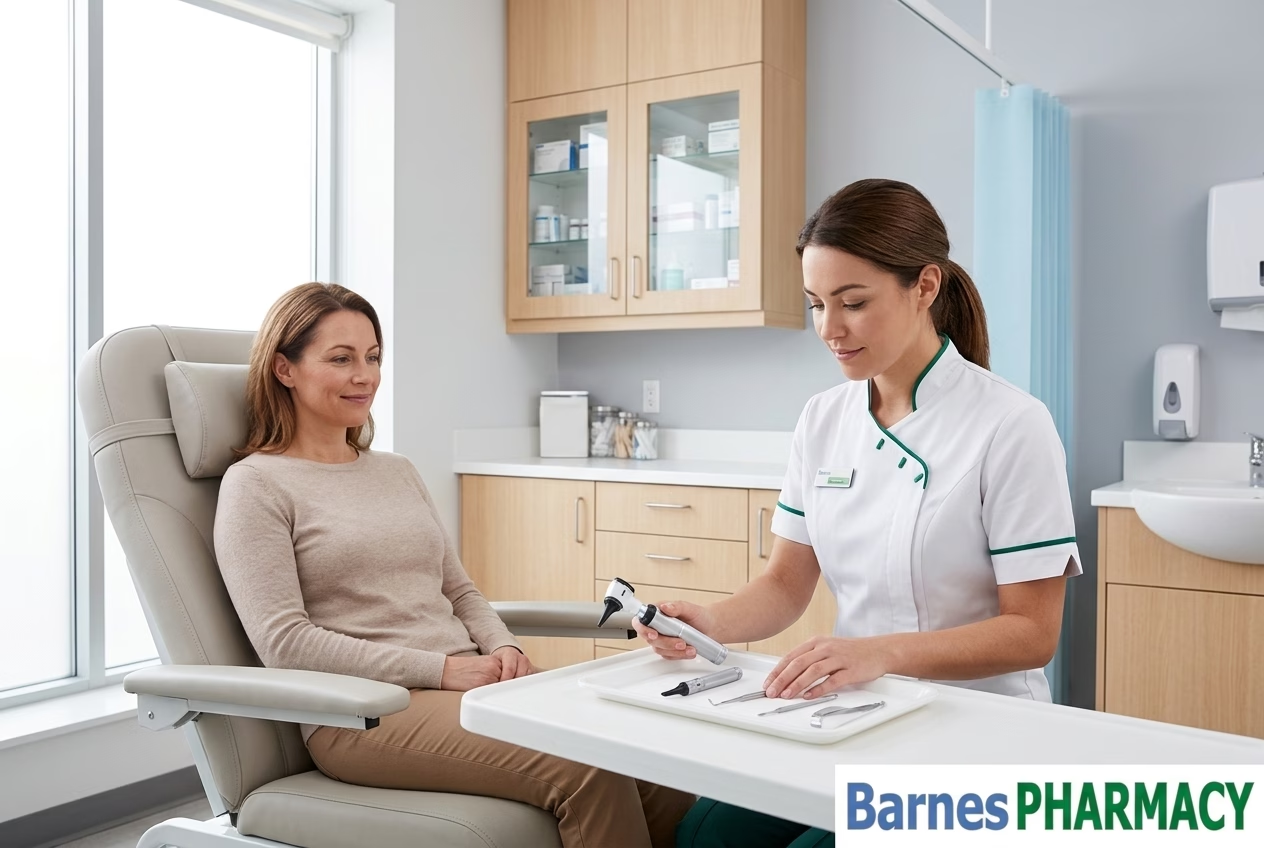
Blocked Ears After Swimming or Flying: When Professional Ear Wax Removal May Help
A blocked or muffled ear after swimming or flying is common and often temporary. Water can become trapped near the entrance of the ear, while changes in cabin pressure can make the ears feel full, uncomfortable or difficult to “pop”. However, these symptoms can also occur when earwax has built up and is already narrowing the ear canal. When wax is present, swimming or flying may make the blockage more noticeable. Water can sit against the wax, and pressure changes may make existing fullness or reduced hearing feel worse. If the sensation does not settle, or if it is affecting your hearing, a professional ear wax assessment may help identify the cause and advise on suitable removal. Why do ears feel blocked after swimming? The ear canal is designed to allow water to drain naturally. Occasionally, water remains in the canal after bathing or swimming, particularly if there is already a build-up of earwax. This may cause a sloshing sensation, temporary muffled hearing or discomfort. Earwax is a normal substance that helps protect the ear canal. It usually moves towards the opening of the ear naturally. Some people, however, produce more wax, have narrower ear canals, use hearing aids or earplugs, or regularly wear in-ear headphones. These factors can make wax more likely to collect. If water becomes trapped behind or around a wax blockage, the ear may feel suddenly more closed. In some cases, the moisture and irritation can contribute to inflammation of the outer ear, sometimes called swimmer’s ear. This may cause pain, tenderness, itching or discharge rather than simple fullness. Why can flying cause blocked ears? During take-off and landing, the air pressure around you changes. The Eustachian tubes, which connect the middle ear with the back of the nose and throat, normally open to equalise pressure. If they do not open easily, you may experience pressure, popping, muffled hearing or aching. This is known as pressure-related ear discomfort, or ear barotrauma. Flying with a cold, blocked nose, allergies or sinus congestion can make pressure equalisation more difficult. Earwax does not usually cause the pressure problem itself, because wax is in the outer ear canal while pressure changes affect the middle ear. Nevertheless, a wax blockage can add to the sensation of fullness and can make hearing seem particularly muffled after a flight. Simple measures such as swallowing, yawning, sipping water or gently chewing may help the ears equalise during ascent and descent. Do not forcefully blow while pinching your nose, particularly if this causes pain. If your ears remain blocked after the flight, an assessment can help distinguish wax from pressure-related problems or another ear condition. Signs that earwax may be contributing Earwax is more likely to be involved when symptoms include: A gradual reduction in hearing in one or both ears A feeling of fullness or blockage that persists after swimming or flying Ringing or buzzing in the ear Itchiness or irritation in the ear canal A change in hearing after using cotton buds, earplugs or in-ear headphones Previous episodes of troublesome wax build-up These symptoms are not specific to earwax, so it is important not to assume that wax is the cause. A trained professional should look in the ear before recommending removal. This is especially important if symptoms are sudden, severe or only affect one ear. When professional ear wax removal may help Professional ear wax removal may be appropriate when wax is visibly blocking the ear canal and is causing reduced hearing, discomfort or troublesome fullness. It can also be useful when over-the-counter drops have not cleared the blockage, when you need your ears assessed before using hearing equipment, or when you have been advised that wax needs to be removed for an examination. At Barnes Pharmacy, the service begins with an ear assessment. If wax is present and removal is considered suitable, the practitioner can discuss the available approach and what to expect. Removal may involve microsuction, in which a small medical suction device is used to remove wax under direct vision. The appropriate method depends on the appearance of the ear, the amount and consistency of wax, and your medical history. Professional removal is different from trying to reach deep into the ear yourself. The ear canal and eardrum are delicate, and inserting objects can push wax further in or cause injury. A professional assessment also helps avoid treating presumed wax when the symptoms may actually be due to infection, pressure problems or another cause. What should you do before an appointment? Follow the advice provided when booking your appointment. In some situations, wax-softening drops may be recommended beforehand to make removal easier. Do not use drops if you have been told you have a perforated eardrum, have grommets, have had recent ear surgery, or have previously reacted badly to ear drops unless a suitable clinician has advised you to do so. Avoid cotton buds, hairpins and other objects in the ear. Ear candles are not a safe or reliable way to remove wax and can cause burns or block the ear with candle wax. Do not attempt to flush the ear at home if you have a history of eardrum problems, ear surgery, recurrent ear infections or significant pain without first obtaining medical advice. When to seek medical advice promptly Ear wax removal is not suitable for every ear complaint. Seek medical advice rather than arranging routine wax removal if you have severe or worsening pain, pus or blood coming from the ear, fever, marked dizziness, facial weakness or sudden hearing loss. Sudden hearing loss, especially in one ear, should be assessed urgently. You should also mention any history of a perforated eardrum, ear surgery, grommets, recurrent infections or significant skin conditions affecting the ear. If an assessment suggests that the blockage is not caused by wax, you may be advised to contact your GP or another appropriate healthcare professional. Making future swimming and flying more comfortable After swimming, dry the outer ear gently with a towel and

Autumn Travel Health Checklist: Vaccinations, Medication and Travel Advice to Arrange Before You Go
Autumn is a popular time to travel. Some people seek warmer weather before winter arrives, while others are heading abroad for city breaks, visiting family, long-haul holidays or winter sports. Wherever you are going, a little preparation can help you stay well and enjoy your trip with greater confidence. Travel health advice is not the same for every destination. Your requirements may depend on the countries and regions you will visit, the length and purpose of your trip, your activities, your accommodation and your medical history. Barnes Pharmacy’s Travel Clinic can help you review these factors and make an appropriate plan before you leave. 1. Arrange a travel health consultation early Ideally, arrange a travel health appointment around six to eight weeks before departure. Some vaccinations require more than one dose, with doses spaced over several weeks. Starting early also gives you time to obtain prescriptions, check entry requirements and seek further medical advice if needed. However, do not assume it is too late if your departure is sooner. A last-minute consultation may still be useful. Some vaccines can provide protection after an initial dose, and a healthcare professional can prioritise the advice most relevant to your itinerary. For your appointment, bring details of your planned destinations, travel dates, accommodation and activities. It is also helpful to bring your vaccination history, a list of your medicines and information about any allergies, long-term conditions, pregnancy or plans to become pregnant. 2. Check which vaccinations you may need Your routine UK vaccinations should be up to date before travelling. Depending on your circumstances, this may include vaccinations such as tetanus, diphtheria, polio, measles, mumps and rubella. Some infections that are uncommon in the UK remain more widespread elsewhere. Additional travel vaccines may be recommended for particular destinations. These can include hepatitis A, typhoid, hepatitis B, rabies, Japanese encephalitis or meningococcal vaccines. Not everyone needs every vaccine, and recommendations can vary within the same country. A consultation allows the pharmacist to assess your individual risk rather than relying on a general list. Yellow fever is a particularly important consideration. Some countries require proof of yellow fever vaccination for entry, while others may recommend vaccination because of transmission risk. A valid International Certificate of Vaccination or Prophylaxis may be required, and certificate rules can depend on your travel route, including countries where you are transiting. Seasonal flu vaccination may also be worth discussing, particularly if you are at increased risk from influenza, travelling in crowded settings or visiting a destination where flu activity is high. It does not replace the routine travel vaccines recommended for your destination, but it may form part of a broader autumn travel health plan. 3. Review your regular medicines Take enough of your regular medication for the whole trip, with a small additional supply in case of delays. Keep medicines in their original labelled packaging and pack them in your hand luggage, rather than placing everything in checked baggage. Extreme temperatures and lost luggage can cause problems for medicines stored in the hold. Ask your GP or pharmacist whether your medicines need any special storage, such as refrigeration, or whether you need a letter explaining your treatment. If you use insulin, inhalers, injectable medicines or medical devices, plan how you will carry and use them during the journey. Some medicines that are routinely prescribed in the UK are controlled drugs or may be restricted in other countries. Rules can differ considerably, and you may need documentation or permission from the destination country. Check the latest requirements well in advance and do not assume that a prescription alone is sufficient. It is also sensible to carry a list of your medicines, including their generic names and doses, together with relevant allergies and emergency contact details. Keep a digital copy securely available, but do not rely on your phone as your only record. 4. Consider malaria and insect-borne diseases If you are visiting a malaria-risk area, you may need antimalarial tablets as well as measures to avoid mosquito bites. The appropriate medicine depends on the destination, season, length of stay, other medicines and your health. Some treatments need to be started before travel and continued after returning, so seek advice early. Preventing bites is important even when malaria tablets are not recommended. Use an effective insect repellent, wear long sleeves and trousers where practical, and sleep under an insecticide-treated net or in accommodation with suitable screening or air conditioning. Remember that mosquitoes can spread other infections in some destinations, including dengue, chikungunya and yellow fever. Repellent should be applied according to its instructions. If you are using sunscreen as well, apply sunscreen first and insect repellent afterwards. Ask for professional advice if you are travelling with young children, during pregnancy or with sensitive skin. 5. Prepare for autumn weather and your planned activities Autumn conditions can vary widely. A destination may be warm during the day but cool at night, while mountain areas can experience sudden changes in weather. Pack suitable layers, comfortable footwear and protection from sun, wind and rain. Sunburn and heat-related illness remain possible outside the UK, even when the temperature feels mild. Use high-factor sunscreen, seek shade during the strongest sunshine and drink regularly. If you are going skiing or taking part in outdoor activities, consider suitable eye protection, skin protection and travel insurance that covers the activities you plan to undertake. For long journeys, move around regularly where possible, drink water and avoid excessive alcohol. If you have previously had a blood clot or have a condition that increases your risk, speak to a healthcare professional before travelling. They can advise on suitable precautions for your circumstances. 6. Pack a practical travel health kit Your regular medicines, prescriptions and any required supporting letter. First-aid essentials, such as plasters, dressings and antiseptic wipes. Thermometer, pain relief and rehydration sachets, where appropriate. Hand sanitiser and tissues. Insect repellent and sunscreen suitable for your destination. Any preferred treatment for minor stomach upset, after checking that it is suitable