
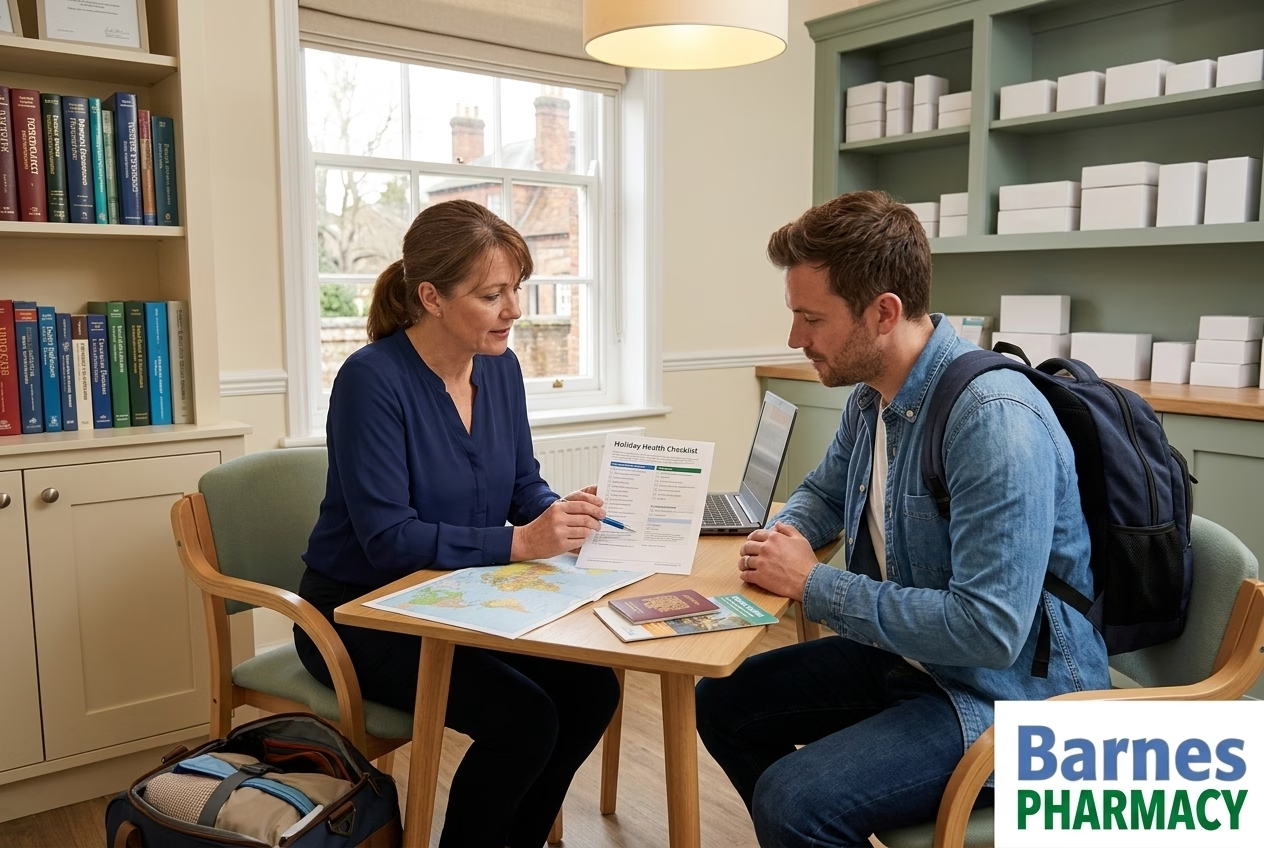
Autumn can be an excellent time to travel. The summer crowds may have eased, temperatures can be more comfortable in many destinations and there are plenty of opportunities for late sunshine, city breaks and long-haul adventures. However, travelling outside the UK can also expose you to infections that are uncommon here, particularly if you are visiting tropical or developing regions.
Arranging a travel health appointment before you leave Welwyn gives you time to check which vaccinations, medicines and precautions may be appropriate for your trip. At Barnes Pharmacy on Welwyn High Street, our travel clinic can provide personalised advice based on your destination, itinerary, length of stay and health needs.
Why autumn travellers should plan ahead
It is easy to assume that travel vaccinations are only needed for summer holidays. In reality, the required advice depends on where you are going and what you will be doing, rather than the season alone. An autumn holiday could involve a beach resort, a safari, visiting friends and relatives, backpacking, a cruise or business travel. Each type of journey may carry different health considerations.
Some vaccines are given as a single dose, while others require more than one dose or need time to provide protection. In some cases, a course may need to be completed several weeks before travel. Booking early is therefore helpful, especially if you are travelling during the October half-term, over the autumn school holidays or during a busy period for travel clinics.
Even if your departure is soon, it is still worth seeking advice. A travel health professional can explain which measures may still be useful and how to reduce your risk during the journey.
Which travel vaccinations might you need?
The vaccines recommended for travel vary according to the country or countries you plan to visit. Advice can also differ between urban areas, rural locations and resorts. Depending on your plans, you may be advised to consider protection against illnesses such as hepatitis A, typhoid, tetanus, diphtheria, polio, hepatitis B, rabies or yellow fever.
Not every traveller needs every vaccine. Your appointment should take account of:
- All the countries and regions on your itinerary, including stopovers
- Whether you will stay in hotels, private accommodation, hostels or camps
- Activities such as trekking, cycling, animal contact, diving or visiting remote areas
- The length and nature of your trip
- Previous vaccinations and your routine UK immunisation history
- Any medical conditions, allergies, pregnancy or plans for pregnancy
- Medicines you take regularly and any previous reactions to vaccines
Some countries may require proof of vaccination for entry in particular circumstances. Yellow fever vaccination certificates, for example, can be required for travellers arriving from or transiting through certain countries. Requirements can change, so it is important to receive current advice for your specific itinerary rather than relying on an old certificate or general online information.
Do not forget your routine vaccinations
Travel planning is a useful opportunity to check that your routine UK vaccinations are up to date. Protection against illnesses such as tetanus, diphtheria, polio, measles, mumps and rubella remains important, whether you are travelling abroad or staying at home.
Measles outbreaks can occur internationally, and measles is highly infectious. If you are unsure whether you have received the recommended measles, mumps and rubella vaccinations, mention this when booking your appointment. Your pharmacist or another appropriate healthcare professional can advise you on the next steps.
It is also sensible to consider seasonal health before you travel in autumn. Depending on your personal circumstances and destination, you may wish to discuss protection against flu or COVID-19 through the appropriate NHS or private service. These are separate from many destination-specific travel vaccines, so ask what is suitable for you.
Malaria advice and other travel health precautions
Vaccination is only one part of travel health. Some destinations carry a risk of malaria, which is spread by mosquitoes and can cause serious illness. There is no routine malaria vaccine for most travellers, but prescription antimalarial tablets may be recommended for certain areas. The choice depends on the destination, season, type of travel, length of stay and your health history.
Preventing mosquito bites is important even when you are taking antimalarial medication. Practical measures include using an effective insect repellent, covering arms and legs where possible, sleeping under a mosquito net when appropriate and staying in accommodation with screens or air conditioning if available.
You may also need advice about food and water safety, travellers’ diarrhoea, altitude, sun exposure, animal bites and what to do if you become unwell abroad. Travellers should avoid touching unfamiliar animals in areas where rabies occurs, and seek urgent medical advice after a bite or scratch.
What to bring to your travel clinic appointment
To make your appointment as useful as possible, bring or have ready as much information as you can. This includes your travel dates, flight route, accommodation details and a list of every country you will visit. Include stopovers if you plan to leave the airport or have a lengthy transit.
If you have a vaccination record, bring it or check whether your details are available through your GP practice. Do not worry if your records are incomplete; the travel clinic can discuss your history and advise you based on the information available.
You should also mention regular medicines, allergies, long-term conditions, previous vaccine reactions and whether you are pregnant, breastfeeding or trying to conceive. Children, older travellers and people with weakened immune systems may need particularly careful, individual advice.
Plan your autumn holiday health checklist
- Book a travel health appointment as soon as you know your itinerary.
- Check whether your routine vaccinations are up to date.
- Ask whether destination-specific vaccines or malaria tablets may be appropriate.
- Make sure you have enough regular medication for the whole trip, with some extra planning time in case of delays.
- Keep medicines in their original packaging and carry them in your hand luggage where possible.
- Arrange suitable travel insurance and check that it covers your activities and medical conditions.
- Pack insect repellent, sunscreen, a basic first-aid kit and any recommended health products.
- Check entry requirements and allow time for any required vaccination certificates.
Book your travel clinic appointment in Welwyn
Whether you are heading for autumn sunshine, visiting family overseas or planning a more adventurous trip, early travel health advice can help you prepare with confidence. Barnes Pharmacy’s travel clinic on Welwyn High Street offers a convenient way to discuss your plans and arrange appropriate vaccinations and advice.
Book your travel clinic appointment before you fly from Welwyn.